 Conectando
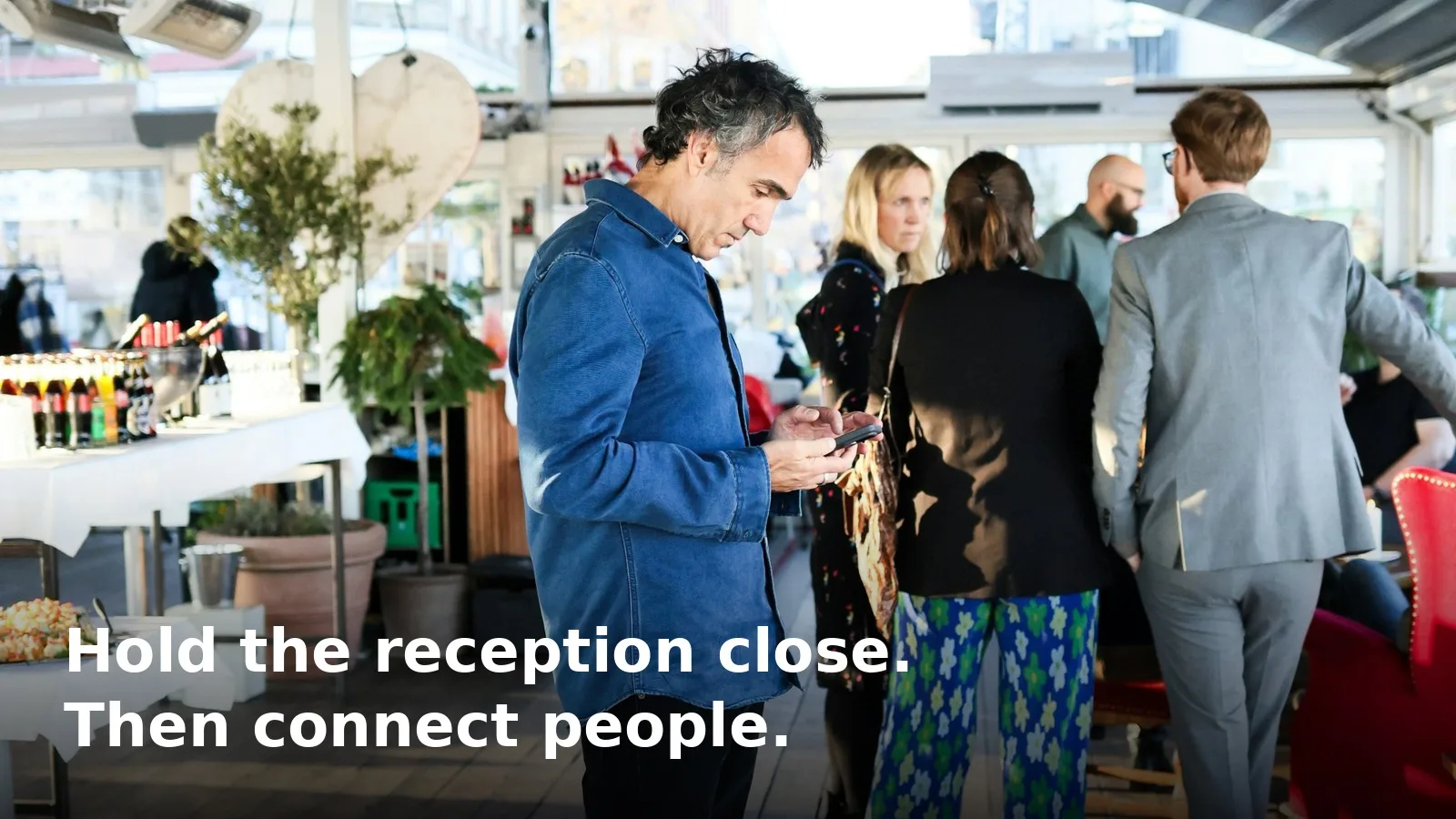
Photo by Filip Rankovic Grobgaard on Unsplash (text overlay: Conectando)
After Your Tokyo Event, Why Guests Skip the Networking Reception
In Tokyo, a networking reception that is far away or starts late quietly loses its guests. Where you hold it, and who connects people once they arrive, decides whether they stay.
When your event ends, if the reception is held somewhere far away, or if there is a long gap before it starts, many people simply leave. Some go off to have dinner elsewhere. Not everyone, but honestly, quite a lot of people go home.
The venue decides your reception
The basic rule is to hold the reception right next to your event venue and start it without a gap. When you plan the reception, decide the location and budget first.
I recommend one of these three setups:
1. A venue with restaurants in the same building For example, Shibuya Hikarie has event halls and restaurants in one building.
2. Use a large hall for the daytime event, and a separate room in the same venue for the evening reception I have run receptions this way myself. Because there was no travel time at all, a very large number of people joined the reception.
3. Use the event hall itself for the reception When the event ends, ask people to wait just a little, then start the reception in the same space.
If you have room in your budget, a hotel is also a good choice. It costs more, but hotels can handle special meals such as vegan menus, which makes things much easier.
A uniquely Japanese venue can be worth the distance
There is one exception: uniquely Japanese places such as temples or Noh theaters. I have held receptions at a temple and at a Noh theater myself. Guests from overseas love these places, and they give Japanese attendees something to talk about too. They are worth choosing even if they are away from your event venue. The risk is that some people leave while moving between the two.
After the venue, what matters most is someone who connects people
Japanese attendees, including VIPs, worry about the language barrier. If you do nothing, Japanese and overseas guests will split into completely separate groups at the reception.
So put someone in place who connects people in both languages. In my case, I did this myself as the organizer: I went around introducing attendees to each other, working in both English and Japanese. A student volunteer can also play this role.
When you look for a venue
This column has venue guides by group size and by area.
Planning an event in Tokyo? A rough idea is enough to start.
Contact