 Conectando
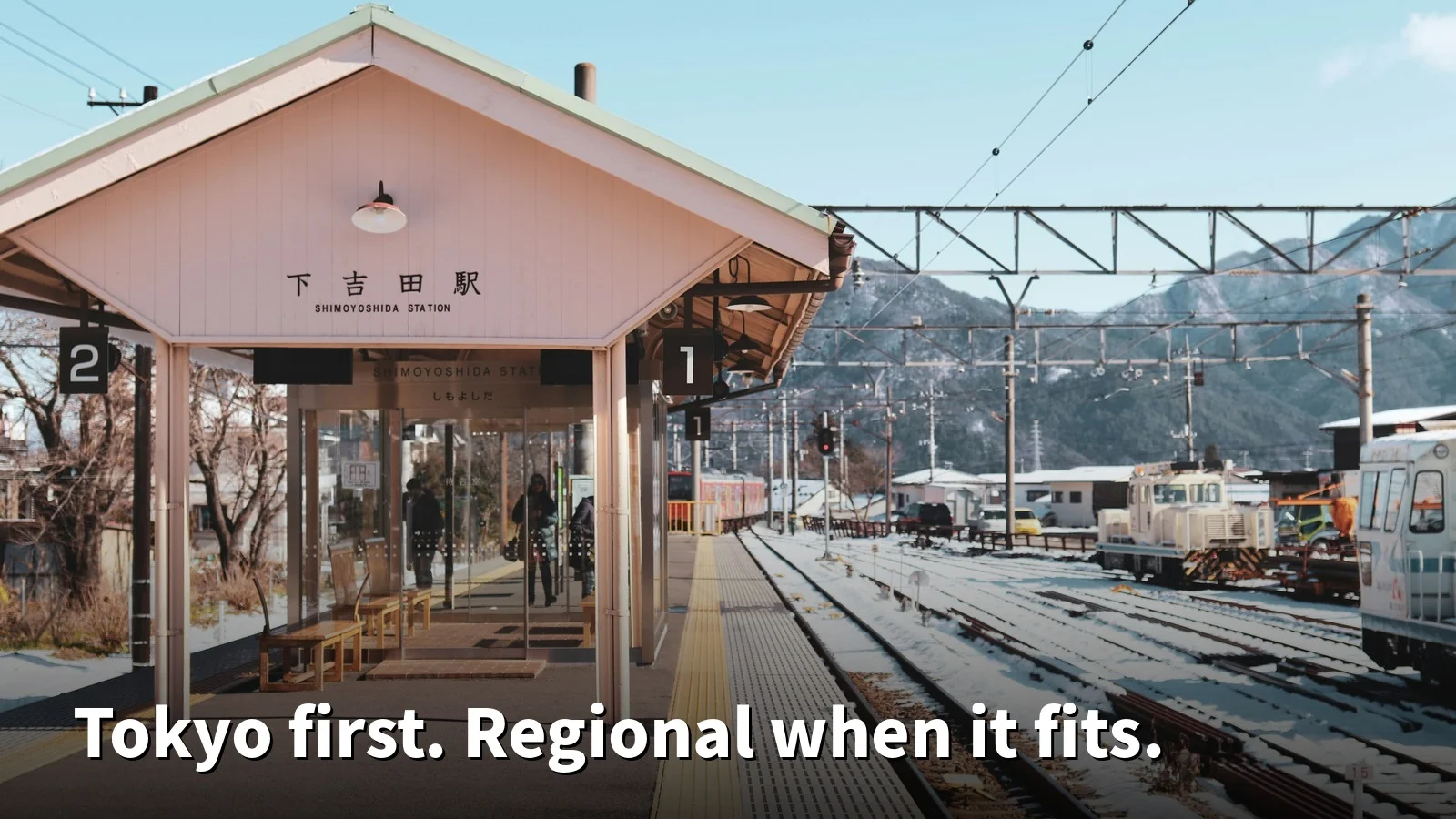
Photo: Karen Z / Unsplash
Should Your Event Be in Tokyo? When a Regional City Is the Better Choice
Tokyo is the default for a first event in Japan, for reasons you can count. But three situations call for a regional city instead. Here is how to tell which one you are in.
Clients sometimes ask me: "Does it have to be Tokyo? What about Osaka, Kyoto, Fukuoka?"
My short answer: for your first event in Japan, Tokyo. But not always, and not forever. This article explains why Tokyo is the default, when a regional city is the better choice, and how to tell the difference.
Why Tokyo is the default
Three reasons, and they are all numbers.
People. Tokyo has a population of about 14 million (※1). No other prefecture in Japan comes close. If your event depends on attendance, Tokyo is where the attendees are.
Head offices. About half of Japan's major companies (those with capital of 1 billion yen or more) are headquartered in Tokyo, and 76% of foreign-affiliated companies in Japan are based here (※1). If you want to meet decision-makers, most of them work within a train ride of central Tokyo.
Flights. Narita and Haneda together handled roughly 55% of all international passengers arriving in or departing from Japan in 2024 (※2). Most of your overseas guests will land in Tokyo whether you hold the event there or not.
There is also a practical reason that has nothing to do with statistics. "Tokyo first, then regional" is the order most companies follow when they come to Japan. It is not a rule, but it is the path with the fewest surprises.
Tokyo's two real downsides
I have thought hard about this, and I can only name two.
Venues are booked. As I wrote in an earlier column, Tokyo has more venues than any other city in Japan — and they still fill up. For popular months and popular venues, six months ahead is normal.
You are one of many. Tokyo hosts an enormous number of events every week. Even a good event can struggle to stand out, and attracting attendees is genuinely harder when they have five other things to go to on the same evening.
That is the whole list. For most first-time events, the upside outweighs both.
When a regional city is the right choice
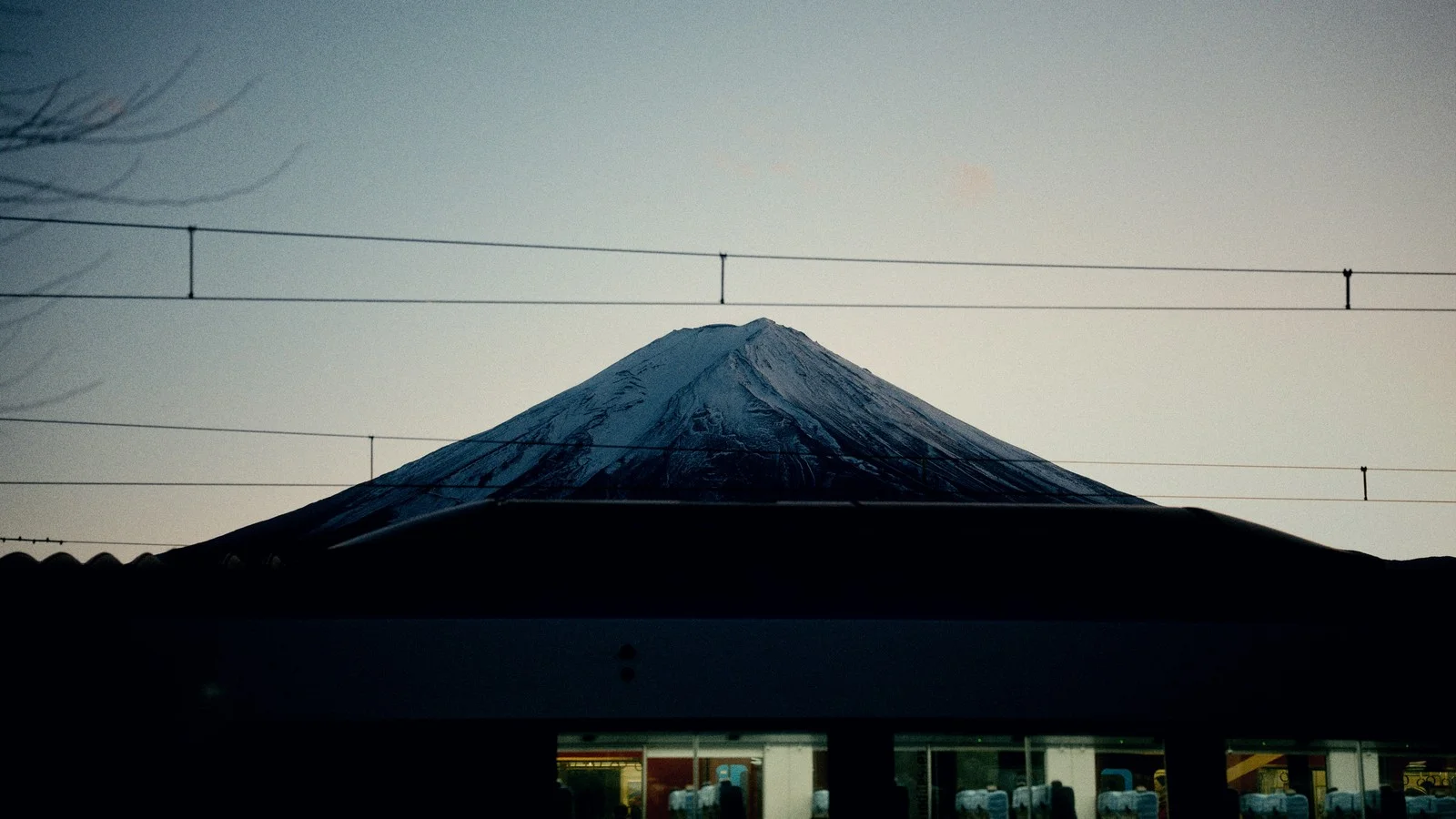 A local train near Lake Kawaguchi, with Mt. Fuji behind. Photo: Flavio Mori / Unsplash
Regional cities are not a fallback. They are a choice — with conditions. Here are the three patterns I see most often.
1. If you are doing a big event in Tokyo anyway, add a regional one. You have flown all the way to Japan. Holding one event in Tokyo and going home is a missed opportunity. Within the same trip, it is worth adding a smaller session in another city — Osaka, Fukuoka, or wherever your next customers are. The big Tokyo event builds broad awareness; the smaller regional one lets you meet a different set of customers and partners.
2. You want people to stay overnight together. This is the one most often overlooked. Hold an event in Tokyo and everyone goes home at 9 p.m. Hold it two hours away, and everyone stays at the same hotel, eats dinner together, and talks until midnight. Off-site meetings, and gatherings of influencers or partners you fly in from around the world, often work better because they are away from Tokyo. The distance is the feature.
3. Invitation-only, small numbers. If you decide who comes — 20 partners, 30 top customers — you do not need Tokyo's population. You can invite them somewhere overseas visitors already love, such as Niseko. It creates a sense of occasion that Tokyo cannot, and it is the event your guests will still be talking about a year later.
The order I usually recommend
If none of the three patterns applies, start with Tokyo. Hold it once or twice, learn how Japan responds to your event, and then consider a regional edition. The exception is pattern 3: an invitation-only event for a small group can go regional from day one.
What actually decides it
You may have noticed that none of the reasons above is "Tokyo is better" or "Osaka is cheaper." The decision comes back to the same two things every time: what the event is for, and what the budget is. Decide those first, and the city usually decides itself.
If you are not sure which pattern you fall into, that is exactly the conversation I have with clients before anything is booked.
Sources
※1 Tokyo Metropolitan Government, Invest Tokyo, "Tokyo's Urban Strength" — population 14.13 million; about half of Japan's companies with capital of ¥1 billion or more; 76% of foreign-affiliated companies in Japan. https://www.investtokyo.metro.tokyo.lg.jp/en/whytokyo/tokyos-urban-strength.html
※2 nippon.com, "Full Recovery in Number of International Passengers at Japanese Airports in 2024" (based on MLIT airport management data) — Narita 33%, Haneda 22% of international passengers in 2024. https://www.nippon.com/en/japan-data/h02505/
Planning an event in Tokyo? A rough idea is enough to start.
Contact