 Conectando
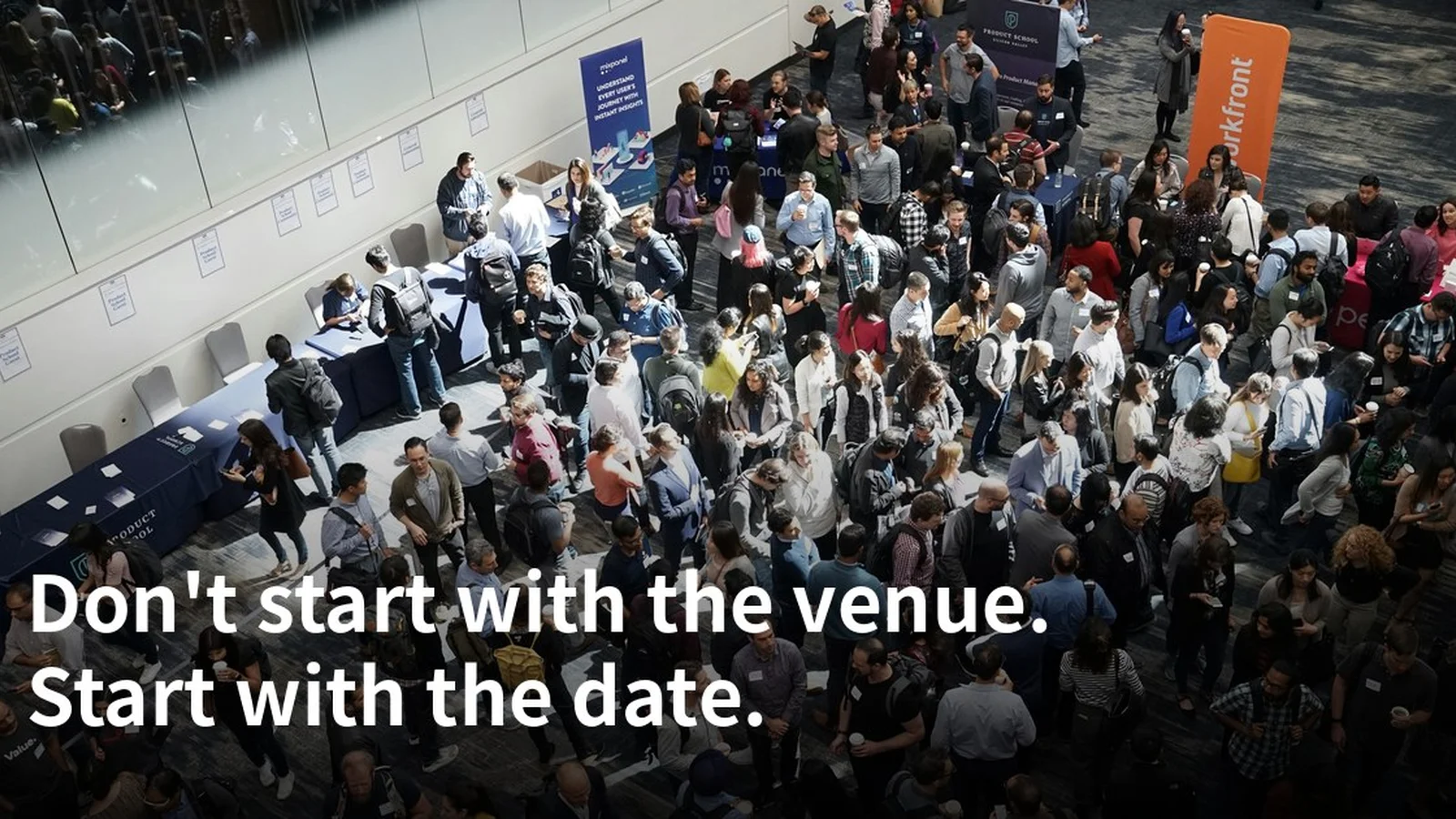
Photo by Product School on Unsplash
What to Decide Before Choosing an Event Venue in Tokyo
Overseas organizers usually ask me about venues first. I ask them about the date. Here is why, and what else to settle before you look at a single room.
When overseas organizers ask me about holding an event in Tokyo, I don't start with venues. There are three things to settle first, and if you follow this order, finding a venue becomes much easier.
1. Start with the timing
The first thing I ask is: when? Tokyo has busy seasons, and I always advise against December (year-end) and March (the end of Japan's fiscal year). Two reasons: venues and event staff are fully booked, and so many events overlap that attracting an audience becomes a struggle.
There is one more thing people often miss: clashes within your own industry. If a major event in your field is happening on the same day, almost nobody will come. Check the industry calendar before you fix a date.
The reverse also works. "Side events," held alongside a large event, have become popular. If your event is small, you can hold it nearby during a big event and reach the people who are already there.
Timing matters that much. It is better to adjust the number of guests or the size of the venue than to give up a good date.
2. Understand how venues work in Tokyo
Tokyo probably has more venues than any other city in Japan. It still feels tight because the number of events is even greater. During peak seasons, there is almost nothing available. If you want your ideal date, start about a year ahead. Many venues only open bookings a year in advance.
Also, many venues do not publish their availability online. They tend to prioritize events that return every year, so they prefer not to open their calendars. The reliable way to find out is simply to ask.
3. Narrow it down by headcount and budget
Once the timing is set, the next two questions are headcount and budget. With those two, the list of possible venues is largely decided. When I hear a rough headcount and budget, I can usually picture the candidates, and from there I work on the dates.
Location (which part of Tokyo) and your target audience also play a role, but the core is three things: headcount, budget, and purpose. The type of venue — hotel, exhibition hall, event hall, rental conference room — follows from these three, and I will cover that in a separate article.
4. The most common misunderstanding: "English will be fine"
Overseas organizers often ask whether they can manage everything in English. The answer depends on which part you mean: operations or promotion.
Operations can run in English, as long as you have one person who speaks English and knows how events work. Promotion is a different story. Attracting attendees depends on Japanese far more than people expect. Even Japanese professionals who read English well often don't open an English invitation, and some find it intrusive. A website in English alone gets a weak response.
In short
Settle the timing first, then headcount and budget, then purpose. Once these are clear, the venue choice narrows on its own, and there is still plenty of time to look. For details on individual venues, see the bizintokyo venue guide.
Planning an event in Tokyo? A rough idea is enough to start.
Contact