 Conectando
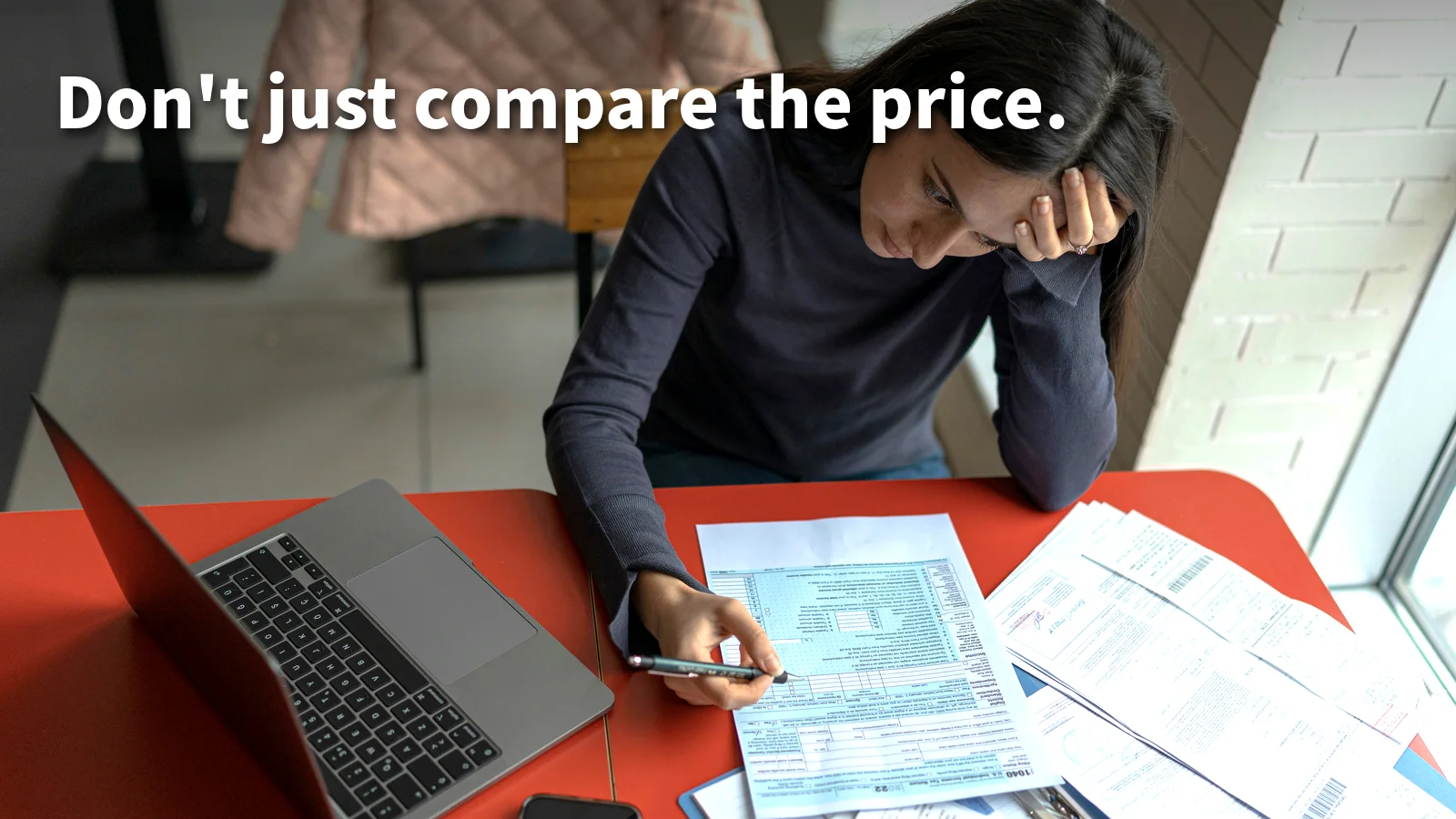
Photo by Ahmet Kurt on Unsplash
How to Compare Event Quotes in Tokyo: Look Beyond the Price
You've received quotes from several event companies in Tokyo, but the totals alone don't tell you which one to choose. Here's what to check beyond the price.
You're planning an event in Tokyo and have received quotes from a few event companies. But you're not sure which one to choose.
If you haven't collected more than one quote yet, start there. I explain why in How Much Does an Event in Tokyo Cost?. This article is the next step: how to compare the quotes once they arrive.
The most important step: have the decision-maker review the full quote
Let me start with the most important point. Don't leave the quote to the Tokyo side alone.
- If you have a team member in Tokyo, don't decide based only on their summary.
- If you have no one in Tokyo and are working directly with an event company or a coordinator, don't decide based only on their summary either.
Whoever makes the final call should go through the full quote together with the Tokyo side, and ask about anything that isn't clear.
When the decision-maker is involved from the beginning, it's easier to discuss the budget and approve changes before it's too late to adjust the plan.
Quotes go up. So keep the increase small
An event quote almost always ends up higher than the first version. This isn't unique to Japan.
What matters is keeping the increase as small as possible, and checking at the quote stage so you don't end up right at the edge of your budget.
Increases usually come from two things:
- Items that aren't in the quote at all
- Different ideas about how elaborate the event will be
Below are the things I check at the quote stage.
Check 1: Are the venue's optional charges included?
When the venue's quote comes together with the event company's quote, the venue's optional charges are sometimes left out.
At one event I worked on, we rented chairs at ¥500 each. That may not sound like much, but for 500 chairs over three days, it became a ¥750,000 expense (approximately $4,800 at the time of writing).
These extra charges are often written near the bottom of the quote. Ask the event company and the venue about them.
Check 2: Is anything you need missing?
Another common case is that items you consider necessary are missing entirely.
If you have run this event before, show the event company the video and the quote from that time. You'll find many of the missing items that way.
If you have nothing from a past event to refer to, ask people you know who have run events. Otherwise, I think you have to trust the event company.
Check 3: Do you agree on how elaborate it will be?
 Photo by Tyler Witkin on Unsplash
How much to decorate the stage, how big the screens should be. This is where ideas often differ.
For example, whether to split the screen into two monitors, or how upscale the chairs for the people on stage should be. You can't tell these things without seeing images.
Check 4: Who provides the staff and equipment?
Staffing costs depend on how many people you need in total and who provides them. Some may come from your own team, others from the event company or volunteers.
Some venues require you to use their own staff, which raises the cost.
If you plan to rely on volunteers, keep in mind that the cost will change if not enough volunteers are available and you have to hire paid staff through the event company.
The same goes for equipment. For example, renting a laptop for registration or operations costs about ¥10,000 (approximately $64 at the time of writing) each, so check whether you can bring your own.
Just ask the event company directly: "How many staff do we need?" "Are there any items that could still go up?"
Show the quote to AI as well
AI can help with checks 1 to 4. Give it the quote and ask:
- What could become an extra charge?
- What is missing?
- Are there small things, such as staff and equipment, that I should confirm?
When a price is very different from what you expected
If a price is significantly different from what you expected based on your own experience, get a separate quote for that item alone.
It also helps to ask the vendors you usually work with in your own country.
For example, if renting a monitor seems very expensive: is it really expensive in Tokyo? Are there other rental companies? Look it up yourself, or ask someone in Japan to look into it.
Check 5: The company itself
Compare the companies themselves, not just the price.
- Whether they tell you honestly where the cost might go over budget
- How fast they reply: I think a company that replies quickly is a company that is motivated. A company that replies slowly is likely to be slow during the event, too.
- Experience with similar events: tech for a tech event, food for a food event. If a company hasn't run a similar event, it may be hard to explain what you have in mind. A company with experience in similar events is worth it, I think, even if it costs more.
If it fits your budget, look at fit, integrity and track record rather than the lowest price. Especially for your first event in Japan, you'll rely on the event company a lot, so it's worth spending here.
If someone on your team knows events, have them check
If someone on your team knows events well, have them look at the quote and check it.
Get approval before you decide
One more time: explain the quote, including each item, to the people who approve the budget, and get their approval before you decide.
In short
Quotes almost always go up. So make sure the decision-maker reviews the full quote. Then, at the quote stage, check for missing items, different ideas about how elaborate it will be, and who provides staff and equipment. And choose on reply speed, fit and track record, not price alone.
If you don't have anyone in Tokyo who connects your team with the people on the ground, see You don't need to speak Japanese to run an event in Tokyo — you need one specific person.
If you'd like one more company to compare, feel free to include Conectando. See our services or contact us.
Planning an event in Tokyo? A rough idea is enough to start.
Contact